
ChatGPT Optimization in 2026: The Complete Guide to GEO, Technical SEO, and Prompt Engineering
The ultimate guide to optimizing your website and prompts for ChatGPT in 2026. Generative Engine Optimization (GEO), technical preparation, featured snippets, 15 practical ways to improve AI responses, and ready-to-use prompt templates.
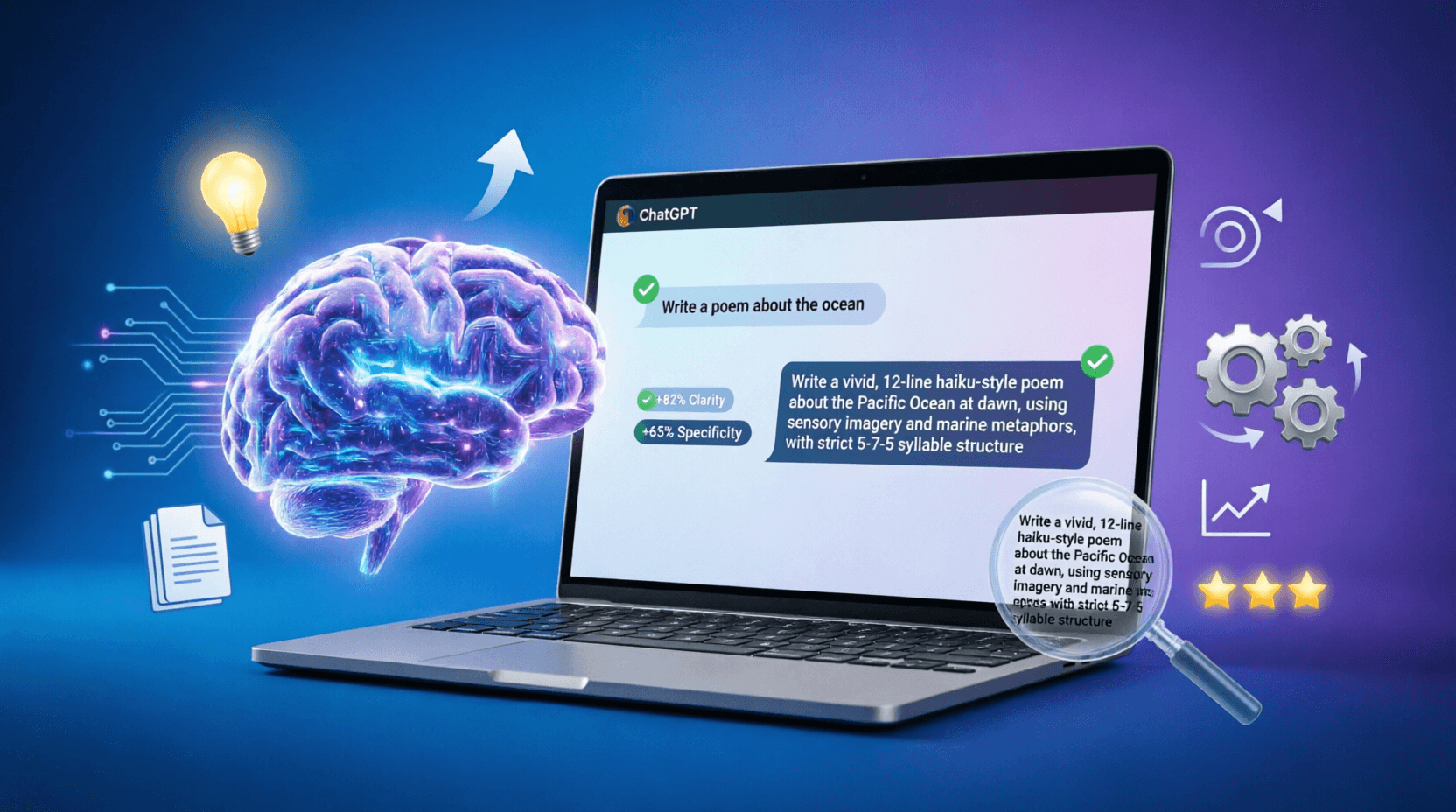
ChatGPT Optimization in 2026: The Complete Guide to GEO, Technical SEO, and Prompt Engineering
Over the past two years, the search landscape has changed beyond recognition. If in 2023 we were discussing how to adapt classical SEO for AI-generated answers, by 2026, ChatGPT optimization has evolved into a full-fledged discipline with its own rules, metrics, and tools. Users are increasingly skipping Google search results entirely—they ask ChatGPT, Perplexity, Claude, or Google AI Overviews and receive comprehensive answers directly within the interface. According to recent data, up to 55% of informational queries in 2026 are resolved without a single click on organic search results.
For website owners, this means one thing: if your resource is not optimized for AI models, you are losing more than just search rankings—you are losing brand mentions, citations, and ultimately, traffic. For professionals who use ChatGPT in their daily work, the problem is different: weak prompts yield weak results. The difference between a vague "write an article" and a properly structured query is the difference between a 300-word generic draft and a polished, publication-ready piece.
In this guide, we will explore ChatGPT optimization from two angles. The first is the technical optimization of your website for ChatGPT recommendations—a set of actions that help AI models discover, understand, and cite your content. The second is ChatGPT prompt optimization—the art of crafting queries that extract maximum value from the model. We will also cover a emerging field: GEO (Generative Engine Optimization), which has become the logical evolution of classical SEO in 2026.
This material is based on real-world case studies from 2025–2026, featuring practical examples, ready-to-use prompt templates, and interactive checklists. It is designed for website owners, SEO specialists, and content marketers, as well as anyone looking to improve ChatGPT answers for personal or professional tasks. If you are looking for a tool to quickly refine your queries, try our AI Prompt Optimizer, or start from scratch with our Prompt Generator.
What is ChatGPT Optimization and Why It Is the New Reality of 2026
Before diving into practical steps, it is crucial to understand what we mean by ChatGPT optimization. It is not a single trick or a checklist of hacks; it is a systematic approach that combines technical website adjustments, content strategy, and query formulation skills. In 2026, this term encompasses three major directions, each influencing how AI models interact with your content and how you interact with the models themselves.
Three Directions of ChatGPT Optimization
The first direction is website optimization for ChatGPT. Its goal is to ensure that AI models can see your content, understand its structure, extract facts from it, and recommend your resource to users. This involves technical aspects: Schema.org markup, heading hierarchy, page load speed, and parsing accessibility. This is what people usually mean when they talk about "technical optimization for ChatGPT."
The second direction is prompt optimization. Its goal is to receive the most accurate, structured, and useful responses from ChatGPT. This involves prompt engineering skills: knowing how to assign a role, define context, specify format, add constraints, and provide examples. This is essential for anyone using AI at work, from content creators to developers and analysts.
The third direction is GEO (Generative Engine Optimization). This emerging field has established itself as a distinct discipline in 2026. GEO combines the principles of classical SEO, content strategy, and technical optimization for AI models. Unlike traditional SEO, which targets search engine rankings, GEO aims to ensure your content is cited in AI responses, appears in featured snippets, and is recommended directly to users.
All three directions rely on the same core principles: structure, clarity, factuality, context, and uniqueness. The only difference is whether you apply them to an HTML page, a text query, or your overall presence in the AI ecosystem.
Why Classical SEO Is No Longer Enough in 2026
To understand why optimizing your website for ChatGPT recommendations is now mandatory, look at the numbers. In 2023, about 25% of informational queries were resolved without a click. In 2024, it was 35%. In 2025, 45%. By 2026, analysts project this figure will reach 55–60%. This means more than half of all users get their answers without ever visiting a website.
However, AI models do not pull information out of thin air. They cite specific sources—those that are well-structured, contain verifiable facts, have a clear hierarchy, and are technically marked up. If your site does not meet these requirements, you simply fall off the AI's radar. Even if you hold top positions in classical Google search, it does not guarantee citations in ChatGPT.
Another critical factor is the shift in user behavior. People increasingly start their research not with a search bar, but with a chat. They ask: "Which CRM is best for small business?", "How to set up an email campaign for SaaS?", or "What are the content marketing trends in 2026?". ChatGPT analyzes the query, formulates an answer based on its knowledge and web data, and cites its sources. If your website is not among those sources, you have lost the user before they even knew you existed.
This is why featured snippets and ChatGPT optimization has become a critically important task. Featured snippets are the short answer blocks in Google that AI models actively use as a primary source. Ranking for a snippet simultaneously improves both classical SEO and visibility in AI answers. This is the exact intersection where traditional search and the new AI era meet.
Who Should Be Doing ChatGPT Optimization?
The answer is simple: virtually anyone who works with content and websites. Let us break it down by role.
Website and business owners must understand that their online presence is now evaluated not just by Google rankings, but by how frequently their resource is cited by AI models. If you are not optimizing your website for ChatGPT, you are losing potential clients who arrive via AI recommendations.
SEO specialists need to expand their toolkit. Classical methods—keywords, backlinks, technical audits—remain important, but they must now be supplemented with structured data implementation, featured snippet optimization, and an understanding of how AI models parse content.
Content marketers and copywriters must learn to write not only for humans but also for AI models. This does not mean making text "robotic"—on the contrary, high-quality, structured, factual content performs equally well for both humans and AI.
Developers and product managers who use ChatGPT daily must master prompt engineering skills. The difference between a weak and a strong prompt is the difference between receiving generic advice and getting a ready-to-implement solution.
Students, researchers, and freelancers—anyone using AI for learning, work, or creativity—will benefit immensely from knowing how to improve ChatGPT through proper prompting.
Next, we will break down each direction in detail, starting with the technical optimization of your website.
How ChatGPT Chooses Sources: Principles of AI Models Working with Web Content
Before discussing specific actions, it is important to understand exactly how ChatGPT and other AI models process web content. This will help you make informed decisions when optimizing your website for ChatGPT and build a strategy based on mechanics, not guesswork.
Indexing and Content Parsing
ChatGPT, like other large language models, does not "read" the internet in real-time for every query. It has a knowledge base trained on a massive dataset, which it periodically updates via web indexing. When you ask a question, the model first consults its internal knowledge, and then, if web search is enabled, it pulls fresh data from the web.
This means two important things. First, your content must be accessible for parsing—it must render technically correctly, have a clean structure, and not be blocked from crawlers. Second, the content must be of high enough quality to make it into the training samples and indexes of AI models. Superficial articles, duplicated content, and low-value pages simply never reach the AI's "radar."
The Role of Structured Data
AI models work exceptionally well with marked-up content. When a page has Schema.org microdata, it is much easier for models to extract specific facts: product names, prices, ratings, authors, publication dates, and Q&A pairs. This does not mean your content will never be cited without markup—it might be—but markup significantly increases the probability of citation.
This is why technical optimization for ChatGPT always begins with an audit and implementation of structured data. This is the foundation upon which everything else is built.
How Models Evaluate Content Quality
AI models, much like search engines, evaluate content based on several parameters:
Authority — Who is the author, do they have expertise, and are they mentioned in other sources? Content from recognized experts is cited more frequently.
Freshness — How relevant is the information to the current moment? Articles with 2025–2026 dates are prioritized over materials from 2022–2023.
Depth — How thoroughly is the topic covered? Superficial 300–500 word articles lose to comprehensive 1500–3000 word pieces with examples and case studies.
Structure — How well-organized is the content? H1 → H2 → H3 headings, lists, tables, and definitions all help the model extract information efficiently.
Uniqueness — Does the content contain original data, research, or opinions? AI models ignore duplicated content.
Factuality — The presence of specific numbers, dates, and source links. Content with verifiable data is cited 2–3 times more often than general reasoning.
Understanding these principles helps you build a ChatGPT optimization strategy that actually works, rather than creating an illusion of activity.
Technical Optimization for ChatGPT: What to Do First
Now, let us get specific. Technical optimization for ChatGPT is a set of actions that help AI models find, understand, and cite your content. These actions overlap significantly with classical technical SEO but have important distinctions related to how AI models operate.
1. Schema.org Structured Data: The Absolute Foundation
Let us start with the most critical element. Structured data is microdata that helps AI models (and search engines) understand exactly what is on your page. Without markup, the model sees plain text. With markup, it sees: "this is an article, here is the author, here is the publication date, here are the main Q&As, and here are related products."
Which markup types are mandatory in 2026:
Article and BlogPosting — for all articles and blog posts. Specify the author, publication date, update date, title, description, and image. This is the basic markup without which AI models struggle to understand the context of the material.
FAQPage — for Q&A sections. This is critically important markup for ranking in featured snippets and citations in ChatGPT. Each question and answer must be marked up separately.
HowTo — for step-by-step guides. If you have instructions, guides, or tutorials, you must use this markup. AI models especially love citing step-by-step instructions.
Product with reviews — for product pages. Specify the name, price, availability, rating, and reviews. This helps AI models recommend specific products.
Organization — for the homepage and "About" page. Specify the name, logo, contacts, and social media. This helps models understand who you are and what your expertise is.
Person — for author pages. If you have experts who write materials, Person markup with biography, experience, and social media links significantly boosts content authority in the eyes of AI models.
BreadcrumbList — for navigation chains. Helps models understand the site hierarchy and content structure.
Implementing markup is not a one-time action but an ongoing process. Every new material should be published with correct markup from the start. Existing materials need to be gradually refined. If you are unsure how to do this correctly, you can order ChatGPT optimization from specialists—the AI SEO Generator service includes a full audit and markup implementation.
2. Heading Hierarchy: How AI Models "Read" Your Page
AI models do not read a page the way humans do. They scan it by structure, and headings are the main guide. A proper H1 → H2 → H3 hierarchy helps the model understand what each section is about and extract the needed information.
Basic heading hierarchy rules:
There should be only one H1 on the page—the main heading that accurately reflects the topic of the material. The H1 should contain the main keyword and be understandable to both humans and AI models.
H2s are the main sections of the material. Each H2 should be self-sufficient—that is, from the heading alone, it should be clear what the section is about. It is H2s that most often appear in featured snippets and are cited in AI answers.
H3s are subsections within H2s. They are needed for detail but should not duplicate the meaning of H2s.
Common heading hierarchy mistakes:
Skipping levels—for example, going from H1 directly to H3. This confuses both the model and users.
Overly generic headings—"Introduction," "Conclusion," "Our Services." Such headings carry no information and do not help the model extract meaning.
Heading duplication—when multiple H2s have the same or very similar meaning. This blurs the focus of the material.
Lack of questions in headings—AI models especially cite well headings formulated as user questions. For example, "How to set up an email campaign for SaaS?" is cited more often than "Email campaign setup."
Good heading examples for ChatGPT optimization:
- "What is Generative Engine Optimization (GEO)?"
- "How to technically prepare a website for ChatGPT recommendations?"
- "What mistakes reduce website visibility in AI answers?"
- "How much does it cost to order ChatGPT optimization in 2026?"
- "How to improve ChatGPT answers with structured prompts?"
Such headings work simultaneously for classical SEO, AI models, and users.
3. Short Definitions in the First Paragraph: The 50–80 Word Rule
One of the most important principles of featured snippets and ChatGPT optimization is short definitions at the beginning of each section. AI models often take answers from the first 50–80 words after the heading. If there is a clear, structured definition in this block—the probability of citation increases many times over.
How to write definitions for AI models:
The definition should be 1–2 sentences, no more. The model will not take a long introduction—it looks for a brief, concise answer.
The definition should start with the key concept. For example: "ChatGPT optimization is a set of actions aimed at..."
The definition should contain the essence, without "fluff" or general phrases. Avoid constructions like "In today's world..." or "With the development of technology..."
The definition should be self-sufficient—that is, understandable without reading the rest of the section.
Example of a good definition:
Generative Engine Optimization (GEO) is a digital marketing direction that combines the principles of classical SEO, content strategy, and technical optimization for AI models. The goal of GEO is to ensure that website content is cited in answers from ChatGPT, Perplexity, Claude, and other AI systems, as well as appears in featured snippets and AI Overviews.
This definition contains: the key concept, the category (digital marketing direction), the composition (what it combines), and the goal. These are exactly the formulations that AI models cite verbatim.
4. Factuality and Source Links: Why Numbers Matter More Than Words
AI models prioritize content with verifiable data. This does not mean that every line should contain numbers—but the overall level of factuality should be high. Content with specific data, dates, and links to research is cited 2–3 times more often than content with general reasoning.
What counts as factuality:
Specific numbers—percentages, amounts, quantities. Not "significant growth," but "growth of 45% over 6 months."
Dates—when it happened, when it is relevant. Not "recently," but "in 2025–2026."
Names and titles—specific companies, products, people. Not "major brands," but "Amazon, eBay, Shopify."
Links to research—if you cite data, specify the source.
Case studies—real examples with numbers. Not "clients' sales grew," but "client X's sales grew by 32% over 3 months after implementing Y."
How to integrate factuality into content:
Each H2 should contain at least one specific fact—a number, date, name, or case study.
In the introductory paragraph, it is desirable to indicate the time context—"in 2026," "according to 2025 data."
In lists and tables, use specific values, not general formulations.
In examples, specify real companies, products, situations—this increases trust both in you and in the AI model that cites you.
5. Speed, Accessibility, and Technical Cleanliness
The basic technical requirements for optimizing your website for ChatGPT recommendations largely coincide with classical SEO requirements, but with an emphasis on parsing accessibility.
Core Web Vitals — your site must load quickly and stably. LCP (Largest Contentful Paint)—up to 2.5 seconds, FID (First Input Delay)—up to 100 ms, CLS (Cumulative Layout Shift)—up to 0.1. Slow sites are indexed less frequently by AI models.
Robots.txt and sitemap.xml — make sure AI crawlers have access to your content. Check that important sections are not blocked via robots.txt. The sitemap should be current and contain all significant pages.
JavaScript rendering — if your site heavily depends on JS, make sure the content is accessible without executing scripts. Some AI crawlers do not execute JS, and your content simply will not be visible.
HTTPS and clean URLs — a secure connection is mandatory. URLs should be understandable, without unnecessary parameters and symbols. For example, /en/blog/chatgpt-optimization-guide is better than /en/blog/?id=12345&lang=en.
Mobile adaptation — in 2026, most users come from mobile devices, and AI models take this into account. The site should display correctly on all screens.
No broken links — check the site for 404 errors. Broken links reduce trust in the resource both from search engines and AI models.
6. Uniqueness and Content Depth
Superficial articles of 300–500 words are almost never cited by AI models. The optimal volume for getting into recommendations is 1500–3000 words with practical examples, case studies, and original data. But volume is not an end in itself. Depth and uniqueness are more important.
What "deep content" means:
Covering the topic from all sides—not just "what is it," but also "how it works," "why it is needed," "how to apply it," "what nuances exist."
Practical examples—not abstract reasoning, but specific cases, templates, instructions.
Original data—your own research, surveys, analysis. If you cite others' data—specify the source.
Analysis of nuances and exceptions—superficial materials give only a general picture. Deep ones—take into account exceptions, special cases, nuances.
Updatability—content should be regularly updated. An article written in 2023 and never updated loses positions in AI answers.
Uniqueness is not just the absence of plagiarism. It is the presence of an original perspective, your own conclusions, exclusive data. AI models can determine when content simply retells other sources and prioritize materials with original value.
7. Internal Linking and Site Structure
AI models consider not just individual pages, but the overall structure of your website. A well-built internal linking structure helps models understand which topics are your priorities, how materials are connected, and where your expert content resides.
Internal linking rules for ChatGPT optimization:
Each article should link to 3–7 related materials. This helps models see "content clusters" and understand your expertise in a specific topic.
Use meaningful anchor text. Instead of "read more" or "click here," use specific formulations: "learn more about our AI Prompt Optimizer" or "check out our guide on AI SEO Content."
Create hub pages—comprehensive overview materials that tie together all articles on a specific topic. For example, this article on ChatGPT optimization serves as a hub page linking to narrower topics like prompts, SEO, and tools.
Update old materials and add links to new ones. This shows AI models that the site is evolving and the content remains relevant.
8. Multilingualism and Localization
If your website operates in multiple languages, proper multilingual setup is crucial. AI models account for language versions and may cite content in different languages depending on the user's query.
Multilingual optimization rules:
Use hreflang tags to specify language versions of pages. This helps AI models understand which version is intended for which region.
Do not use raw machine translation without editorial refinement. Content quality must be high across all languages.
Adapt content to regional specifics—do not just translate; account for local nuances, examples, and case studies.
Each language version should have its own URL structure—for example, /en/blog/..., /es/blog/..., /fr/blog/....
If you work with multilingual content, use our AI Prompt Translator to adapt prompts for different languages.
Optimizing Your Website for ChatGPT Recommendations: Interactive Checklist
To ensure you do not miss any details when optimizing your website for ChatGPT, we have compiled all actions into a single interactive checklist. Go through it and evaluate how ready your site is for the AI era. This checklist can be used both for auditing an existing site and as a guide when creating new materials.
If you answered "no" to three or more items, your website is losing a significant portion of potential AI traffic. The good news: most fixes can be implemented in 1–2 weeks, and the effects of technical optimization for ChatGPT are usually noticeable within 2–4 weeks of implementation.
If you want to accelerate the process and achieve professional results, you can order ChatGPT optimization from specialized services. Our AI SEO Generator service includes a full site audit, markup implementation, content adaptation for AI search, and recommendations for further development.
Featured Snippets and ChatGPT Optimization: Formats That Get Cited Most
Featured snippets are the short answer blocks in Google that AI models actively use as a source. Therefore, featured snippets and ChatGPT optimization is essentially one task with double the benefits. If your content ranks for a snippet, it is highly likely to be cited in AI answers as well.
Formats That Get Cited Most Frequently
Definition paragraph (40–80 words). This is the most common featured snippet format. AI models use it to answer "What is...?", "Who is...?", or "What does... mean?". The key rule: the definition must be in the first paragraph after the H2, clearly formulated, and start with the key concept.
Numbered list. Used for step-by-step instructions, recipes, and guides. AI models especially love citing lists because they are structured and easily extractable. If you have an instruction, format it as a numbered list with clear steps.
Bulleted list. Used for enumerations—benefits, features, recommendations. Less structured than numbered lists, but still cited well.
Table. Ideal for comparisons, specifications, prices, and features. AI models frequently pull data from tables to answer questions like "Compare X and Y" or "What are the specifications of product Z?".
Short answer to a question (1–2 sentences). Used for quick answers to specific questions: "How much does... cost?", "When does... launch?", "Who founded...?". The answer must be as brief and precise as possible.
How to Optimize Content for Different Snippet Formats
For a definition paragraph:
- Start the section with an H2 formulated as a question: "What is GEO?"
- Provide a 40–80 word definition in the first paragraph.
- Use bold text for the key concept.
- Do not add "fluff" before the definition.
For a numbered list:
- Use an H2 formulated as "How to do X?" or "Step-by-step guide to X".
- Start each step with an imperative verb.
- Indicate the approximate time required for each step.
- Add a brief description of the result after each step.
For a table:
- Use an H2 formulated as "Comparison of X and Y" or "X Specifications".
- Place the table immediately after the H2, without long introductions.
- Use clear column headers.
- Add a brief description of the table right before it.
For a short answer:
- Use an H2 with a specific question.
- Keep the answer to 1–2 sentences, maximum 40 words.
- Start the answer with the key fact.
- Cite the data source if possible.
Common Mistakes That Prevent Snippet Ranking
Overly long introductions. If 200 words of "fluff" precede the core answer, the model will not select your content for a snippet. Brevity is the key to citation.
Lack of questions in headings. Question-based headings are cited significantly more often than statement-based ones. This does not mean all H2s must be questions, but key sections should be formatted this way.
Vague text without specifics. General phrases, clichés, and "fluff" reduce citation chances. AI models look for concrete facts, not rambling.
Content duplication across pages. If the same text appears on multiple pages, models do not know which version to cite and usually cite neither.
Missing FAQPage markup. For Q&A sections, markup is mandatory. Without it, the chances of ranking for a snippet and being cited in AI answers are significantly lower.
Poor HTML structure. If headings are not marked as H1, H2, H3, but are merely bolded or enlarged text, models cannot understand the page structure.
Fixing these mistakes typically yields a 30–60% increase in AI answer citations within 2–3 months. This is one of the most effective investments in optimizing your website for ChatGPT.
How to Improve Prompts for ChatGPT: 15 Practical Ways to Get Better Results
Now, let us move to the second major direction—ChatGPT optimization, specifically how to formulate queries so the model delivers the most accurate, structured, and useful responses. These techniques work in 2026 for GPT-5, GPT-4o, GPT-4.5, and all current model versions. Many are universal and also apply to Claude, Gemini, and other AI systems.
1. Assign a Role (Role Prompting)
ChatGPT responds better when it understands "who" it is supposed to be. A role sets the expertise, tone, depth, and perspective. This is one of the most powerful prompt engineering techniques, significantly improving response quality.
Why the role is so important:
When you do not assign a role, the model responds "on average"—it tries to guess the level of expertise and tone you need. When you assign a specific role, the model activates corresponding patterns from its training data and delivers a more precise, professional answer.
How to assign a role correctly:
The role must be specific. Not "expert," but "senior SEO specialist with 8 years of experience in e-commerce projects." Not "marketer," but "B2B content strategist who has worked with SaaS startups."
The role should include experience context. Specify which companies, projects, or tasks the "persona" has worked with. This helps the model activate the right patterns.
The role must match the task. Do not ask a "copywriter with 20 years of experience" to write technical documentation—a "technical writer with IT experience" is a better fit.
You are a senior SEO specialist with 8 years of experience working with large e-commerce projects.
You have worked with Amazon, eBay, and major marketplaces, helping them grow from zero to millions of monthly visitors.
Your task is to provide practical advice on optimizing a website for ChatGPT, based on real-world experience, not generic textbook recommendations.
Answer specifically, with examples and numbers. Avoid general phrases and "fluff".
2. Define the Task Precisely (Task Definition)
The more specific the task, the more accurate the result. Vague formulations are the main cause of weak responses. "Help with marketing" is not a task; it is a direction. "Create a 30-day content plan for a B2B SaaS product's Instagram account targeting product managers" is a task.
Rules for clear task definition:
Use action verbs: "create," "write," "analyze," "compare," "suggest," "optimize." Avoid passive formulations like "tell me about" or "think about."
Specify the exact output: not "an article," but "a 1500-word article with 4 H2 sections and a 5-question FAQ." Not "a plan," but "a 30-day plan broken down by weeks and themes."
Add task context: why this is needed, who will use the result, and in what situation.
Create a 30-day content plan for a B2B SaaS product's Instagram account.Product: CRM system for small businesses
Audience: Small business owners, 25–45 years old, without a technical background
Goal: Increase demo requests by 30% within a month
Plan format:
Table with columns: Date, Post type (carousel, video, stories, reel), Topic, Brief description, CTA
4 posts per week (16 posts per month)
Balance: 40% educational content, 30% case studies, 20% product features, 10% entertaining
At the end of each week—an analytical post with key takeaways
Additionally:
Suggest 5 reel ideas with high viral potential
Indicate the best posting times for this audience
3. Specify the Audience (Audience Definition)
The audience dictates the language, complexity, depth, and angle of delivery. A prompt for a CTO and a prompt for a college student will be drastically different, even if the topic is the same. Specifying the audience is one of the most underrated techniques that significantly improves response quality.
What is important to specify about the audience:
Demographics — age, gender, geography, profession.
Expertise level — beginner, intermediate, advanced, expert.
Pains and needs — what bothers them, what they want to achieve.
Usage context — where and how they will use the result.
Examples of audience specification:
- "Audience: CTOs of tech startups, 35–50 years old, with a technical background, looking for ways to scale infrastructure."
- "Audience: 2nd–3rd year marketing students, no practical experience, need theory with examples."
- "Audience: Small service business owners, 30–55 years old, no technical education, looking for simple automation solutions."
4. Specify the Format (Format Specification)
Indicate the form in which you want to receive the result. This is one of the simplest yet most effective techniques. Without a format specification, the model decides how to format the answer itself and often chooses a suboptimal option.
Format options:
- Article with H1, H2, H3, and a specific structure
- Comparison table with specific columns
- Numbered list of steps
- Email with subject, body, and CTA
- Code with comments in a specific language
- Presentation with slide structure
- JSON or YAML for integration with other systems
- Dialogue between two characters
- Checklist with verification points
- Video script with timing
Create a comparative review of 5 CRM systems for small businesses.Result format:
Introductory paragraph of 50–70 words with context
Comparison table with columns: Name, Price/mo, Key Features, Pros, Cons, Best For
5 H2 sections (one for each CRM), each 150–200 words
In each section: brief description, 3 key features, 1 use case
H2 section "How to Choose a CRM" with a 7-point checklist
FAQ with 5 questions and 40–60 word answers
Final paragraph with a recommendation
Tone: Practical, objective, without salesy language
Language: English
Volume: 2000–2500 words
5. Add Constraints (Constraints)
Constraints focus ChatGPT and prevent the answer from "blurring." This is one of the most powerful techniques separating professional prompts from amateur ones. Constraints can relate to length, style, content, format, or sources.
Types of constraints:
By length — "1500–2000 words," "maximum 100 words per point," "no more than 5 items in the list."
By content — "use only data from 2024–2026," "do not mention competitors," "add at least 3 real-world examples."
By style — "avoid technical jargon," "do not use passive voice," "write in short sentences under 15 words."
By structure — "each H2 must contain at least 2 sub-points," "end each section with a CTA," "use only bulleted lists, no numbered ones."
By sources — "cite only verified research," "do not use data older than 2 years," "provide sources for every statistic."
Write an introduction for an article about optimizing a website for ChatGPT.Constraints:
Length: Exactly 150–180 words
Style: Professional yet friendly, no corporate jargon
Structure: 3 paragraphs of 50–60 words each
Content:

First paragraph: The problem (why classical SEO is no longer enough)
Second paragraph: The solution (what ChatGPT optimization is)
Third paragraph: Value proposition (what the reader will get from the article)


Forbidden:

Using clichés like "in today's world" or "in 2026"
Starting sentences with "And" or "But"
Using passive voice
Mentioning specific competitor companies


Mandatory:

Include one specific number (percentage, sum, or quantity)
End with a strong CTA transitioning to the main content
6. Define Tone and Language (Tone and Language)
Tone affects perception. The exact same content, written in a formal versus a friendly tone, will be perceived completely differently. Specifying tone is not just "politeness" to the model; it is a way to get a result that perfectly fits your audience.
Tone options:
- Professional and formal — for B2B content, technical documentation, reports.
- Friendly and conversational — for blogs, social media, email newsletters.
- Humorous and light — for entertaining content, youth audiences.
- Authoritative and persuasive — for landing pages, sales copy, presentations.
- Educational and patient — for guides, tutorials, courses.
- Empathetic and supportive — for health, coaching, and psychology content.
How to specify tone effectively:
Do not limit yourself to one word. Add context: "friendly tone, like an experienced mentor explaining complex things in simple terms."
Specify what to avoid: "no slang, no jargon, no excessive formality."
Provide tone examples if possible: "tone similar to Harvard Business Review—professional but lively."
7. Break Large Tasks into Steps (Chain-of-Thought)
Complex tasks are best broken down into sequential steps. This is one of the most powerful prompt engineering techniques, significantly improving response quality for complex tasks. When the model sees a clear sequence of steps, it executes each one more thoroughly.
Why Chain-of-Thought works:
When you give the model one massive task, it tries to cover everything at once and often does each part superficially. When you break the task into steps, the model focuses on each step individually and delivers a deeper result.
How to break down tasks correctly:
Each step must be self-sufficient—understandable without the context of other steps.
Steps must follow a logical sequence—from simple to complex, general to specific.
Number of steps — usually 3–7. Fewer may lack necessary detail; more may overload the model.
Create the structure and content for a SaaS product landing page.Execute the task step-by-step:Step 1: Analyze the target audience and their main pains (3–5 pains).
Step 2: Based on the pains, define 3–5 key product benefits.
Step 3: Create 5 H1 variants, each with a different angle (problem, benefit, social proof, urgency, curiosity).
Step 4: Write a landing page structure of 8 sections with a brief description of each.
Step 5: For the "Benefits" section, write content using the Feature-Advantage-Benefit formula for each of the 5 benefits.
Step 6: Create 3 CTA variants for different landing page sections (top, middle, bottom).After each step, briefly explain why you made those specific decisions.
8. Use Examples (Few-Shot Prompting)
Examples show ChatGPT exactly what result you expect. This is one of the most effective techniques for getting content in the right style, format, and depth. Instead of explaining in words what you want, just show it.
Types of examples:
One example (one-shot) — sufficient for simple tasks.
Two to three examples (few-shot) — optimal for most tasks.
Many examples (many-shot) — for complex tasks with high style requirements.
How to provide examples correctly:
Examples must be representative—reflecting the exact result you want to achieve.
Examples should be diverse—if providing 3 examples, make them slightly different so the model understands the general pattern rather than just copying one.
After the examples, clearly state the task: "Now create 10 variants in the same style."
Task: Create 10 headlines for an article about optimizing a website for ChatGPT.Example of a good headline (specific, with a number, promising value):
"ChatGPT Optimization in 2026: 15 Ways to Get into AI Recommendations and Increase Traffic by 40%"Example of a bad headline (generic, no specifics, no value):
"Everything about website optimization"Example of another good headline (with a question, addressing audience pain):
"Why Isn't Your Website Cited in ChatGPT? 8 Technical Mistakes and How to Fix Them"Now, create 10 headlines for an article about prompt optimization in the same style as the good examples. Each headline must:
Contain a specific number or promise
Address an audience pain or need
Be 60–100 characters long
Use a strong action verb at the beginning
9. Structure the Prompt (Structured Prompting)
Use markup to improve prompt readability. The model understands a structured prompt much better than a solid block of text. This is especially important for complex tasks with multiple requirements.
Elements of a structured prompt:
"Role" section — who the model is and its expertise.
"Task" section — what exactly needs to be done.
"Context" section — background information.
"Audience" section — who the result is for.
"Format" section — how the result should look.
"Constraints" section — what not to do.
"Examples" section — samples of the desired result.
"Success Criteria" section — how to evaluate the result.
"Additional" section — special requests.
ROLE[Who you are and your expertise. Specify experience, specialization, context.]TASK[What exactly needs to be done. Use action verbs.]CONTEXT[Background information. Why this is needed, in what situation.]AUDIENCE[Who the result is for. Demographics, expertise level, pains.]FORMAT[How the result should look. Structure, volume, formatting.]CONSTRAINTS[What not to do. Length, style, content, sources.]EXAMPLES[Samples of the desired result. 1–3 examples.]SUCCESS CRITERIA[How to evaluate the result. Specific metrics.]ADDITIONAL[Special requests. Nuances, details, exceptions.]10. Add Success Criteria (Success Criteria)
Specify how you will evaluate the result. This helps the model understand what is important to you and focus on the right aspects. Success criteria can be quantitative and qualitative.
Examples of success criteria:
- "The article must contain at least 3 practical tips with examples."
- "Each tip must be backed by a number or case study."
- "The text must be understandable to someone without a technical background."
- "Reading time: 5–7 minutes."
- "The result must pass a plagiarism check."
- "The code must run without errors in the specified version."
11. Request Final Verification (Self-Correction)
Ask ChatGPT to check its own answer before outputting it. This is one of the most underrated techniques that significantly improves result quality. A model instructed to self-correct pays closer attention to details and more frequently fixes its own errors.
Before outputting the final result, perform a self-check against the following criteria:
Are all task items completed? Check each item against the list.
Are there any repetitions, "fluff," or general phrases without specifics in the text?
Check facts, numbers, and dates—are they all correct?
Evaluate readability: are sentences too long? Is the structure clear?
Does the result match the specified format and constraints?
If you find weak spots, rewrite them before outputting.
After the self-check, briefly describe what you improved (2–3 sentences).
12. Improve the Prompt After the First Draft (Iterative Refinement)
The first result is a draft. Use it to create a better prompt. Iterative refinement is a normal process, not a sign that you "wrote the prompt wrong" the first time.
Iterative improvement process:
Create the first prompt and get the result.
Analyze what is unsatisfactory: too generic? wrong format? lacks depth?
Refine the prompt by adding specific instructions for the weak spots.
Get the second result and repeat the analysis.
Usually, 2–3 iterations are enough to achieve an excellent result.
To speed up this process, use the AI Prompt Optimizer, which automatically improves prompts based on prompt engineering best practices.
13. Use Meta-Prompts (Meta-Prompting)
Meta-prompts are prompts that create other prompts. This is a powerful technique for complex tasks where you need the model to first think through the strategy and then execute it.
Example of a meta-prompt:
"First, outline a 5-step plan to solve this task. Show me the plan. After my confirmation, execute each step one by one."
This approach is especially useful for complex analytical tasks, strategy creation, and product development.
14. Apply the "Tree of Thoughts" Method
For very complex tasks, use a method where the model considers several solution options and chooses the best one. This significantly improves response quality for non-standard tasks.
Task: Develop a go-to-market strategy for a new SaaS product.Execute the task in 3 stages:Stage 1: Propose 3 different strategy variants (aggressive, organic, partnership). For each variant, describe:
Main steps
Pros and cons
Estimated budget
Expected results in 6 months
Stage 2: For each variant, evaluate risks (at least 3 risks per variant) and suggest ways to mitigate them.Stage 3: Choose the best variant for a startup with a $50K budget and a 5-person team. Justify the choice by providing 5 specific reasons.Final result: A detailed plan of the chosen strategy broken down by weeks for the first 3 months.
15. Combine Techniques for Maximum Effect
The strongest prompts use multiple techniques at once: role + task + audience + format + constraints + examples + self-correction. Do not be afraid of long prompts—it is better to write one structured 300-word query than to redo the result of a 10-word query 10 times.
ROLEYou are a senior content strategist with 10 years of experience in B2B SaaS. You have worked with Fortune 500 companies and helped dozens of startups grow from zero to millions of users.TASKCreate a detailed 6-month content strategy for a B2B SaaS product (CRM for small businesses).CONTEXTThe product has been on the market for 2 years, has 5,000 active users, and an MRR of $50K. The goal is to double the MRR in 12 months through content marketing.AUDIENCESmall service business owners, 30–55 years old, without technical education. Pains: chaos in the client base, lost leads, no system.FORMAT
Strategic document of 3000–3500 words
Structure: introduction, audience analysis, content pillars, distribution channels, month-by-month content plan, KPIs, budget, risks
Tables for the content plan and KPIs
Specific topic examples for each month
CONSTRAINTS
Only verified data and realistic forecasts
No "fluff" or general phrases
Every piece of advice must include an implementation example
Budget: $5,000/mo for content
EXAMPLESContent pillar example: "Automation for Small Business" — 10 articles, 5 videos, 2 webinars over 6 months.SUCCESS CRITERIA
Strategy must be realistic for a 3-person team
Each month must have specific topics with justification
KPIs must be measurable and achievable
Document must be ready to hand over for execution immediately
ADDITIONALBefore outputting, check the strategy for realism and consistency. If there are weak spots, rework them.
When to Use a ChatGPT Prompt Optimizer and How to Use It
A prompt optimizer is a tool that automatically improves your prompts based on prompt engineering best practices. It is especially useful in four typical scenarios, which we will detail below.
Scenario 1: You have a prompt, but it only works at 60%
This is the most common scenario. You wrote a prompt, it yields a result, but not the one you need. Instead of rewriting from scratch, run it through the AI Prompt Optimizer and get an improved version in 30 seconds. The optimizer will add a role, clarify the task, add structure and constraints—everything you might have missed.
Scenario 2: You need to adapt a prompt for another model
A prompt written for ChatGPT may not work optimally in Claude, Gemini, or other models. Each model has its own peculiarities: different context windows, varying sensitivity to phrasing, and different strengths. The optimizer can adapt the prompt structure to the specifics of a particular model.
Scenario 3: Multilingual optimization
If you need to translate and adapt a prompt to another language, simple translation is not enough. You must account for cultural nuances, linguistic specifics, and phrasing peculiarities. Use the AI Prompt Translator in combination with the optimizer to get a high-quality result in any language.
Scenario 4: Bulk optimization
If you have hundreds of prompts for different tasks—email campaigns, social media posts, product descriptions, articles—manual optimization of each is impossible. The AI Prompt Optimizer processes batches of prompts in minutes, applying best practices to all of them at once.
Prompt Optimization Examples: Before and After
To show the difference between a weak and a strong prompt, let us analyze three typical tasks in detail.
Example 1: Blog Article
Why this prompt is weak:
- No role — the model does not know what expertise level to respond with.
- No specific topic — "marketing" is too broad.
- No audience — who is the article for?
- No format — how many words, what structure?
- No constraints — what tone, what sources?
- No success criteria — how to evaluate the result?
You are a B2B content strategist with 10 years of experience working with SaaS startups.Task: Write a 1500-word article about content marketing for growth-stage SaaS startups (Series A-B).Structure:
H1: Strong headline with a keyword and value promise
Introduction: 100–150 words with a value promise and context
4 H2 sections with practical advice, each 250–300 words
Each H2 contains 2–3 sub-points with examples
2 real-world SaaS company examples with numbers
FAQ with 4 questions and 60–80 word detailed answers
Final CTA with a specific next step
Tone: Practical and professional, no "fluff"
Language: English
Additionally:
Include statistics from 2025–2026 with source citations
Use short sentences (under 20 words)
Avoid clichés like "in today's world"
Include at least one specific number in each H2
Before outputting, check the article for compliance with all structure points.
Result: The weak prompt yielded a generic 300-word text with no structure, examples, or value. The optimized prompt produced a structured 1500-word article with examples, numbers, an FAQ, and a CTA—ready-to-publish material.
Example 2: Email Campaign
You are an email marketer with 7 years of experience in B2B SaaS. You have worked with companies with MRRs ranging from $100K to $5M.Task: Write a 3-email sequence to reactivate inactive users of a SaaS product (CRM for small businesses).Audience: Small business owners who have not logged into the service for 30+ days. Their pains: lost the habit, do not see the value, may have switched to a competitor.Goal: Bring the user back and showcase new features that appeared in the last month.Structure of each email:
Subject line (maximum 50 characters, with personalization)
Personalized greeting with name
The problem the product solves (1–2 sentences)
2–3 new features with specific benefits for the user
Social proof (case study or number)
CTA with a specific action (one button, one goal)
P.S. with an additional incentive (bonus, deadline, exclusive)
Tone: Friendly but professional. Like an experienced mentor who genuinely wants to help.
Length: 150–200 words per email
Language: English
Additionally:
First email: "We miss you" focusing on missed opportunities
Second email: "Look what's new" focusing on new features
Third email: "Last chance" with a deadline and special offer
Before outputting, check each email for compliance with the structure and tone.
Example 3: Image Prompt
You are a prompt engineer for Midjourney with experience creating covers for top publications (HBR, Forbes, Wired).Task: Create a prompt to generate an image—the cover for an article about optimizing a website for ChatGPT in 2026.Style requirements:
Modern minimalism with tech elements
Inspired by Stripe, Linear, and Vercel covers
Clean, professional, without excessive "futurism"
Color requirements:
Main gradient: from blue (#1E3A8A) to purple (#7C3AED)
Accent color: white or light gray for key elements
Background: dark with a slight gradient
Element requirements:
Abstract neural networks (not a literal brain image)
Upward-trending growth charts
Digital particles creating a sense of motion
Thin geometric shapes in the background
Composition requirements:
Central object with clear focus
Space for text on the left (30% of the image)
Dynamic but not cluttered
Mood: Innovative, dynamic, professional, confidentFormat: 16:9, high resolution, suitable for OG images and social mediaTechnical parameters for Midjourney:
--ar 16:9 --v 6 --style raw --q 2Negative prompts (avoid):
Literal images of robots or AI
Cluttered details
Cheap 2010s "futuristic" style
Text and letters in the image
Stock clichés (blue globe, handshakes, lightbulbs)
Create 3 prompt variants with different compositional solutions.
For creating visual prompts, we recommend the Infographic Prompt Generator and Logo Prompt Generator—they automate the process of creating complex visual queries.
Common Mistakes When Writing Prompts for ChatGPT
Even experienced users frequently make the same mistakes that significantly degrade response quality. Let us break down the six most common ones and how to fix them.
Mistake 1: Overly Generic Request
Problem: "Write about marketing," "Help with my website," "Give SEO tips." ChatGPT does not understand what exactly you need and gives a generic answer that is not applicable to your situation.
Solution: Add a role, audience, format, and constraints. Turn "write about marketing" into "write a 1500-word article about content marketing for B2B SaaS startups targeting product managers."
Mistake 2: Lack of Context
Problem: You give a task without explaining why it is needed or in what situation it will be used. The model answers "in a vacuum," without accounting for your specifics.
Solution: Add 2–3 sentences of context before the task. "We are launching a new SaaS product for small businesses. Marketing budget is $5,000/mo. Team size is 3. We need a 6-month strategy."
Mistake 3: Too Many Tasks in One Prompt
Problem: You try to get a strategy, a content plan, copy, and design all in one request. The model loses focus and performs each task superficially.
Solution: Break it into 2–3 separate prompts. First the strategy, then the plan, then the specific copy. Each prompt—one clear task.
Mistake 4: Ignoring Format
Problem: You do not specify the form in which you want to receive the result. The model decides how to format the answer itself and often chooses a suboptimal option.
Solution: Explicitly state the desired format. "Result as a table with 5 columns," "Structured list with H2 and H3," "JSON for CRM integration," "Email with subject, body, and CTA."
Mistake 5: Absence of Examples
Problem: You do not show what result you expect. The model does not understand the style, depth, and tone you want.
Solution: Add 1–2 examples of the desired result. "Here is an example of a good headline: [example]. Here is a bad one: [example]. Create 10 headlines in the style of the good one."
Mistake 6: Incorrect or Overly Generic Role
Problem: The role "expert" or "professional" is too generic and does not give the model the necessary context. Or the role does not match the task—for example, "copywriter" for technical documentation.
Solution: Detail the role with experience, specialization, and context. Not "SEO expert," but "senior SEO specialist with 8 years of experience in e-commerce projects who helped Amazon and eBay grow."
If you want to avoid these mistakes from the very beginning, check out the secrets of the free prompt generator—it covers additional nuances of creating strong queries.
Advanced Prompt Optimization Techniques
For those who have already mastered the basic techniques, there are several advanced methods that take response quality to the next level.
RICE Method for Evaluating Prompts
Use the RICE framework to evaluate prompt effectiveness before using them:
R (Reach) — How widely applicable is the prompt? Can it be used for different tasks or just one?
I (Impact) — How much does the prompt improve the result compared to a basic query?
C (Confidence) — How confident are you that the prompt will yield the desired result on the first try?
E (Effort) — How much time does creating and refining the prompt require?
This method helps prioritize prompt work: first, improve those that yield maximum effect with minimal effort.
A/B Testing Prompts
Create 2–3 prompt versions for the same task and compare the results. This is especially useful for critical tasks where quality is paramount.
Testing example:
Version A: Prompt with the role "SEO Specialist" Version B: Prompt with the role "Content Strategist" Version C: Prompt with no role, just the task
Run all three versions, compare the results by quality, structure, and practical value. Choose the best version and use it as the foundation for future tasks.
Building a Prompt Library
Systematize successful prompts for reuse. A prompt library is one of the most valuable assets in the AI era. A well-organized library saves hours of work every week.
Library structure:
📁 Marketing
- 📄 Email campaigns (reactivation, onboarding, sales)
- 📄 Social media posts (Instagram, LinkedIn, Twitter)
- 📄 Advertising prompts (Google Ads, Facebook, TikTok)
- 📄 Landing pages and sales pages
📁 Content
- 📄 Blog articles (different types: how-to, listicle, case study)
- 📄 AI SEO content (optimized articles)
- 📄 Product descriptions
- 📄 Video and podcast scripts
📁 Visual
- 📄 Infographics (Midjourney, DALL-E)
- 📄 Logos
- 📄 Images
- 📄 Icons and illustrations
📁 Business
- 📄 Reports and analytics
- 📄 Presentations and pitch decks
- 📄 Strategies and plans
- 📄 Market research
📁 Development
- 📄 Code generation
- 📄 Documentation
- 📄 Debugging and refactoring
- 📄 Tests
For each category, store: the prompt itself, task description, example result, tags for quick search, and the last update date.
Meta-Prompting and Prompt Chains
For very complex tasks, use prompt chains where the result of one prompt becomes the input for the next. This allows you to break a complex task into manageable stages and achieve high-quality results.
Chain example:
Prompt 1: "Analyze the small business CRM market and highlight 5 key trends." Prompt 2: "Based on these trends, create 10 article topics." Prompt 3: "For each topic, write a detailed outline with H2 and H3." Prompt 4: "Write the first article based on the outline from Prompt 3."
Each prompt uses the result of the previous one, ensuring coherence and depth.
Metrics and Analytics: How to Measure Optimization Effectiveness
One of the most challenging tasks in ChatGPT optimization is measuring effectiveness. Unlike classical SEO, which has rankings, traffic, and conversions, AI optimization metrics are less obvious. But they exist, and they are important to track.
Metrics for Website Optimization
Number of citations in AI answers. The most direct indicator. Track how often your site is mentioned in ChatGPT, Perplexity, and Claude answers. You can do this manually (by asking typical queries) or through specialized tools.
Featured snippet rankings. Track via Google Search Console and third-party services. Snippet growth usually correlates with AI citation growth.
AI traffic. Although difficult to track directly, you can use indirect signs: traffic growth from unusual user agents, traffic growth without a referrer, or changes in behavior patterns.
Brand mentions in AI. Track how often ChatGPT mentions your brand in answers to questions related to your niche.
Citation quality. Not all citations are equally useful. Track the context in which you are cited, which parts of the content are taken, and how accurately the meaning is conveyed.
Metrics for Prompt Optimization
First-try result quality. What percentage of prompts yield a satisfactory result without iterations? Goal: 70%+.
Number of iterations. How many refinements are needed to get the final result? Goal: 1–2 iterations maximum.
Time per task. How much time is spent creating the prompt and getting the result? Optimization should reduce this time.
Compliance with success criteria. How well does the result match the initial criteria? Evaluate on a 10-point scale.
Reuse rate. How often is a prompt reused? If a prompt is used 10+ times, it is high quality.
Analytics Tools
To track metrics, use a combination of tools:
- Google Search Console — for classical SEO metrics and snippets.
- Specialized AI analytics services — for tracking AI citations.
- Internal dashboards — for prompt metrics and time-on-task.
- Manual checks — periodic testing of key queries across different AI models.
Case Studies and Real-World Examples
To show how ChatGPT optimization works in reality, let us analyze three case studies from different sectors.
Case Study 1: HR SaaS Company
Task: Increase brand citations in AI answers to questions about HR automation.
What was done:
- Implemented Schema.org markup (Article, FAQPage, HowTo) on all key pages.
- Rewrote H2 headings in the format of user questions.
- Added short definitions to the first paragraph of each section.
- Created a hub page with 15 related materials on HR automation.
- Updated existing articles, adding factuality and case studies.
Result after 3 months:
- 180% growth in ChatGPT citations.
- 65% growth in featured snippet rankings.
- 40% growth in organic traffic.
- 25% increase in demo requests.
Case Study 2: Content Agency
Task: Accelerate content creation for clients using AI.
What was done:
- Created a library of 50 optimized prompts for different content types.
- Implemented the AI Prompt Optimizer for prompt refinement.
- Trained the team in prompt engineering techniques.
- Created a workflow: generator → optimizer → editor → publication.
Result after 2 months:
- Article creation time reduced from 6 hours to 1.5 hours.
- Content quality, as rated by clients, grew by 35%.
- Number of projects the agency could handle doubled.
- Cost per content unit produced decreased by 45%.
Case Study 3: E-commerce Project
Task: Improve product descriptions using AI to boost conversion.
What was done:
- Created prompt templates for different product categories.
- Added "product expert" role, audience, tone, and format to the prompts.
- Implemented self-correction in prompts for quality control.
- A/B tested different prompt versions for each category.
Result after 4 months:
- 28% increase in product page conversion.
- 15% decrease in return rates (better description = fewer expectation mismatches).
- Description creation time reduced from 20 minutes to 3 minutes.
- 5x increase in the number of SKUs with high-quality descriptions.
These case studies show that ChatGPT optimization is not abstract theory, but a working tool that delivers measurable business results.
The Future of AI Optimization: What to Expect in 2027
ChatGPT optimization in 2026 is just the beginning. AI models continue to evolve, and optimization principles will change. Here are several trends to consider when building your strategy.
Multimodality
AI models are getting better at handling different content types: text, images, video, and audio. In 2027, optimization will include not just text content, but visual, audio, and interactive formats. Prepare for your images, videos, and podcasts to be "optimized" for AI as well.
Answer Personalization
AI models will increasingly understand the context of the specific user and provide personalized answers. This means the same query might yield different answers for different users. For website owners, this means you need to create content for different audience segments.
Integration with Business Systems
ChatGPT and other AI models will integrate more deeply with CRMs, analytics, and databases. This opens new opportunities for optimizing your website for ChatGPT recommendations—for example, by providing structured data specifically for integration.
New Content Formats
New formats optimized specifically for AI will emerge: interactive guides, adaptive articles, and content with "choices" for the user. Those who master these formats early will gain a competitive advantage.
Regulation and Ethics
As AI develops, so will regulation. Standards for disclosing AI content, transparency requirements, and rules for using AI data will appear. Account for these trends when building your strategy.
Recommended Workflow for Prompt and Website Optimization
To turn everything we have discussed into practical action, we offer three workflow options—from quick start to advanced strategy.
Quick Start (5 minutes per task)
Suitable for typical tasks where you need a result quickly.
- Define the task and audience (1 minute)
- Create a base prompt via the Prompt Generator (1 minute)
- Improve it via the AI Prompt Optimizer (30 seconds)
- Get the result in ChatGPT (1 minute)
- If necessary, 1 iteration of refinement (1 minute)
This workflow yields good quality results in minimal time. Suitable for email campaigns, social media posts, and simple articles.
Standard Workflow (15 minutes per task)
Suitable for medium-complexity tasks where quality is important.
- Research the task and gather context (3 minutes)
- Create a structured prompt using a template (5 minutes)
- Get the first result (1 minute)
- Analyze shortcomings (2 minutes)
- Refine the prompt and get a second result (3 minutes)
- If necessary, one more iteration (2 minutes)
- Save the successful prompt to your library (1 minute)
This workflow yields very high-quality results. Suitable for strategies, detailed articles, and complex analytical tasks.
Advanced Workflow (30 minutes per task)
Suitable for critically important tasks requiring maximum precision.
- Conduct research and A/B test 2–3 prompt versions (10 minutes)
- Evaluate results against metrics (5 minutes)
- Choose the best version and optimize via the AI Prompt Optimizer (5 minutes)
- Adapt for different models via the AI Prompt Translator (5 minutes)
- Create variants for different audiences (3 minutes)
- Add to the library with tags and descriptions (2 minutes)
This workflow yields exceptional quality results. Suitable for strategic documents, important presentations, and critical business tasks.
Website Optimization Workflow (1 week+)
Technical optimization for ChatGPT requires a longer-term approach.
Week 1: Audit
- Technical site audit (speed, accessibility, structure)
- Content audit (quality, depth, factuality)
- Schema.org markup audit
- Competitor analysis and their presence in AI answers
Week 2: Technical Optimization
- Implement Schema.org markup on key pages
- Optimize heading hierarchy
- Add short definitions to first paragraphs
- Fix technical errors
Week 3: Content Optimization
- Update existing materials (add factuality, examples)
- Create new materials for AI search
- Optimize for featured snippets
- Create hub pages and content clusters
Week 4: Testing and Refinement
- Check citations in AI models
- A/B test different approaches
- Refine based on test results
- Create a plan for the next 3 months
If you lack the resources for self-optimization, you can order ChatGPT optimization from specialists. The AI SEO Generator service includes all these stages and delivers measurable results.
FAQ — Frequently Asked Questions
Conclusion: How to Become a Master of ChatGPT Optimization
ChatGPT optimization in 2026 is not a one-time task, but an ongoing process. AI models are evolving, ranking principles are changing, new content formats are emerging, and new ways for users to interact with information are being developed. Those who learn to work with both their website and their prompts will gain a serious competitive advantage. Those who ignore this reality will gradually lose visibility and traffic.
Key Principles of Success
- Always start with a clear role and task—in both prompts and website content.
- Specify the audience and context—this is the foundation of relevance.
- Define the format and constraints—this is the foundation of quality.
- Use examples for complex tasks—this is the fastest way to show what you want.
- Break large tasks into stages—this is the foundation of depth.
- Iteratively refine prompts and content—perfection is achieved gradually.
- Build and systematize a prompt library—this is your main asset.
- Use the AI Prompt Optimizer to speed up work.
- Test different approaches via A/B testing—data is more important than intuition.
- Keep track of model updates and adapt your strategy—the AI world changes fast.
Recommended Tools
- Prompt Generator — for quick starts and creating base prompts.
- AI Prompt Optimizer — for improving existing prompts and bulk optimization.
- AI Prompt Translator — for multilingual projects.
- AI Article Prompt Generator — for creating structured articles.
- AI SEO Generator — for comprehensive website optimization for AI search.
Further Reading
- ChatGPT vs Claude vs Gemini
- Best Free AI Prompt Generators
- Ready-Made Prompts for Copy-Pasting
- Secrets of the Free Prompt Generator
- AI SEO Content Guide
- Prompts for Advertising and Marketing
- AI Infographic: The Guide
- AI Product Descriptions Guide
- Labnana AI Image Generator
- Logo Prompts
Start optimizing your prompts and website today—and get results that are 50–80% better.
Useful Links:
You might also like
Master 12 proven ChatGPT prompt secrets: role prompting, chain-of-thought, custom instructions & GPTs. Updated for 2026.
Comprehensive ChatGPT vs Claude vs Gemini comparison. Discover which AI model is best for coding, writing, research, and business. Complete AI tools comparison guide with pricing, features, and use cases for 2026.

75 ready-to-use AI prompts for ChatGPT, Claude, Gemini, Midjourney, AI video, SEO, and marketing. Copy, paste, customize, and get better results today.
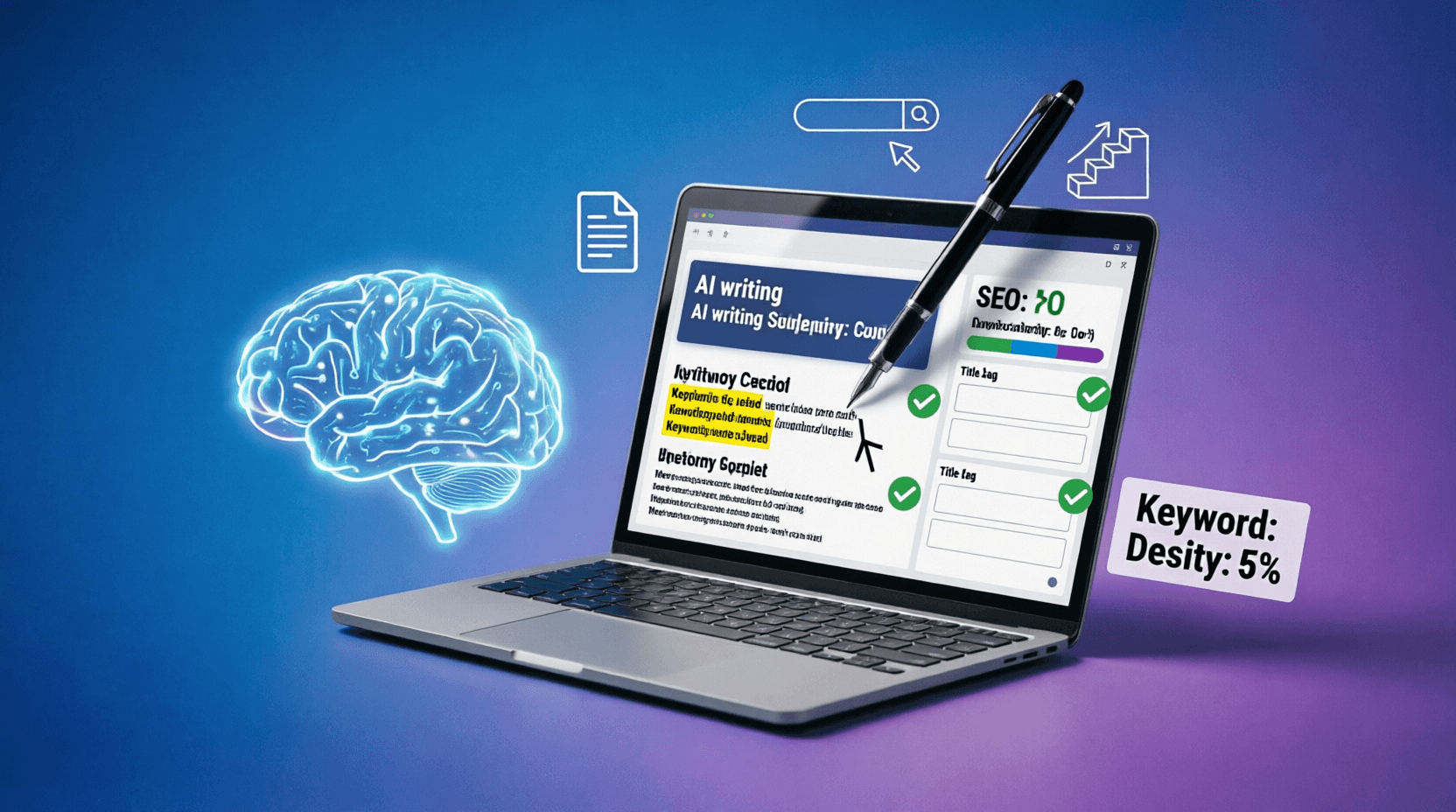
Struggling to rank AI-written content? This step-by-step AI SEO content guide covers keyword strategy, EEAT, prompt engineering, and a 12-step workflow — with real examples and templates you can copy today.