
Nano Banana: The Ultimate Guide to Google's Most Powerful AI Image Model
Everything you need to know about Google's Nano Banana: version history, free access, comparing Nano Banana Pro, Nano Banana 2, and Nano Banana 2 Lite, plus top applications in e-commerce, marketing, and design.
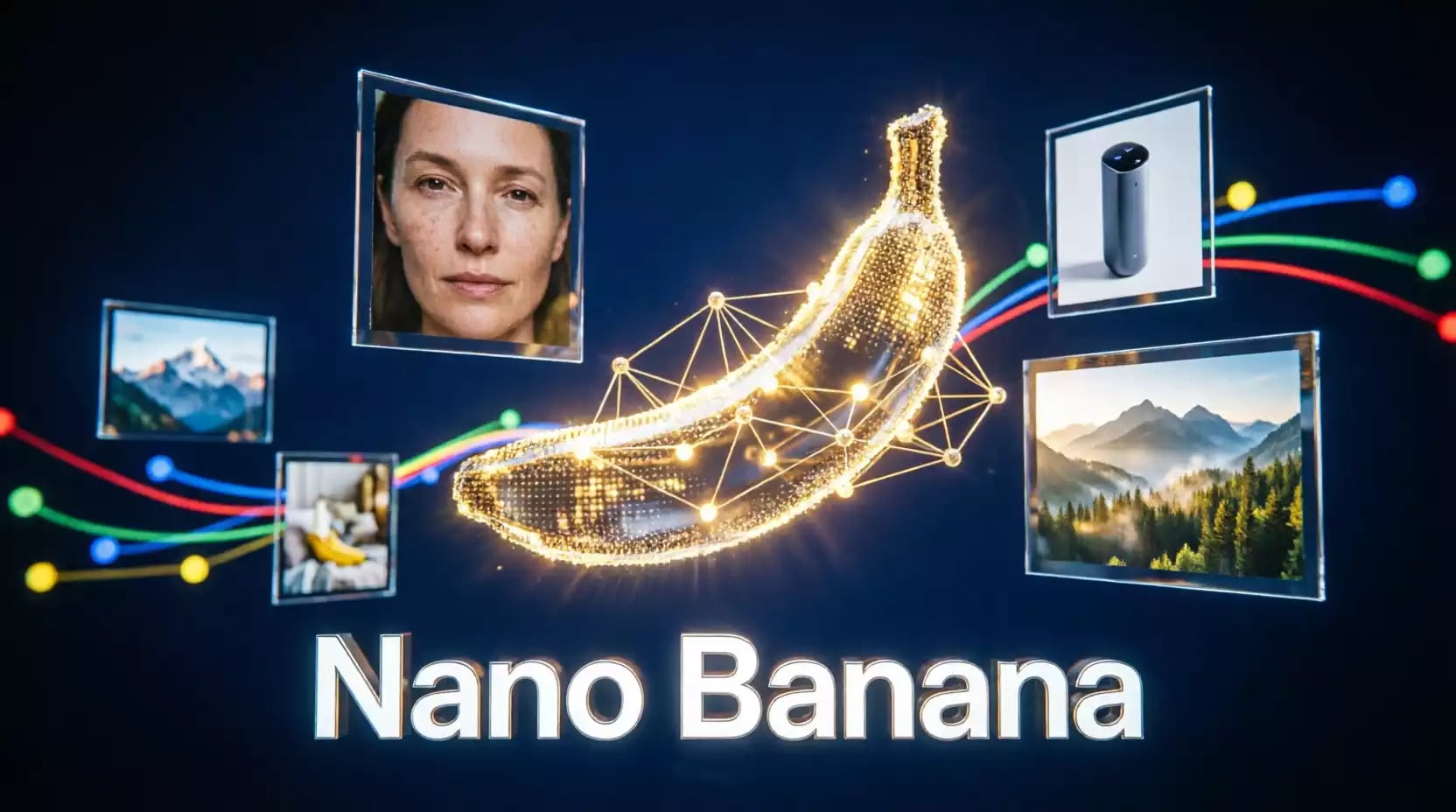
Nano Banana: The Ultimate Guide to Google's Most Powerful AI Image Model
In just a few months, the name "Nano Banana" has evolved from an obscure term whispered among AI developers into one of the most searched keywords in AI image generation. Behind this playful name stands a powerful Google-developed model that has fundamentally reshaped how we approach image generation and editing—whether you're a professional designer, an e-commerce store owner, a content creator, or simply someone who wants to turn a text idea into a professional image in seconds.
In this comprehensive guide, we'll cover everything you need to know about Nano Banana: who actually stands behind the name, how it has evolved across its various versions (Nano Banana, Nano Banana Pro, Nano Banana 2, and Nano Banana 2 Lite), how to use it for free today, and the technical capabilities that have made it a hot topic in AI communities worldwide. Whether you're after deep technical insights or a practical guide for immediate use, you'll find your answers here.

This article is a comprehensive, up-to-date reference on all Nano Banana versions. Use the table of contents above to jump directly to the section that interests you most.
What Is Nano Banana? The Codename Behind Gemini 2.5 Flash Image
Nano Banana is the widely circulated codename for Google's Gemini 2.5 Flash Image model—an advanced image generation and editing model built on the multimodal Gemini architecture. The name first appeared on anonymous model testing platforms (such as LMArena), where users compared different models without knowing which company had developed each one. The tech community quickly noticed that the model identified as "Nano Banana" significantly outperformed its competitors in image quality, prompt adherence, and maintaining element consistency across edited images.
Following Google's official announcement, the company itself partially adopted this popular name in its marketing materials, cementing it as a commonly used term now interchangeable with the official technical name, Gemini 2.5 Flash Image. Technically, Nano Banana leverages the foundational Gemini language model's ability to understand complex text, integrated with a specialized image generation layer. This gives it a critical advantage over many other image models: deeper understanding of context and logical relationships within a prompt, rather than merely recognizing isolated keywords.
Why the Name "Nano Banana" Specifically?
There's no 100% officially confirmed explanation from Google about the name's origin. However, the most widely accepted theory within the tech community is that it was an internal, playful project codename used during development and testing—much like many major tech projects that carry unofficial codenames before their final public launch. The quirky, memorable nature of the name significantly contributed to its viral spread across social media and AI communities, eventually making it even more recognizable than the official technical name among non-specialist users.
Nano Banana: A Complete Version History from First Generation to Latest
Since its initial appearance, Nano Banana has undergone rapid and successive developments, now forming a complete family of models serving different needs—from ultra-fast generation to maximum professional quality. Understanding this evolutionary path is essential for choosing the right version for your specific requirements.
First Generation: Nano Banana (Gemini 2.5 Flash Image)
The initial version that created the first wave of excitement introduced a rare combination of generation speed, realistic image quality, and the ability to understand complex, multi-step text prompts. This version demonstrated clear superiority in community benchmark tests against other leading image models at the time, particularly in its ability to edit an existing image based on precise text instructions without distorting the rest of the image's elements.
The Advanced Version: Nano Banana Pro
Nano Banana Pro arrived as an enhanced version focused on pushing the boundaries of quality and precision, targeting professional users and companies requiring the highest level of visual accuracy and prompt detail adherence. This version featured tangible improvements in handling complex, multi-element scenes, and higher accuracy in generating written text within images—a historical weakness for many competing image models.
Second Generation: Nano Banana 2
Nano Banana 2 represented another significant leap in architecture and performance, with substantial improvements in understanding complex, multi-condition text prompts, and noticeably higher realism in natural scenes, lighting, and shadows. This version set a new benchmark for what is considered "visually realistic" in AI image generation outputs and became a reference point against which many later competing models are measured.
The Fastest, Lightest Version: Nano Banana 2 Lite
The latest addition to the family is Nano Banana 2 Lite, technically known as Gemini 3.1 Flash-Lite Image—a version designed specifically for maximum speed and cost-efficiency without sacrificing highly acceptable quality for everyday and large-scale commercial use. We'll dedicate a full section later in this article to this particular version, given its growing importance among developers and app builders.
If you're a regular user looking for the best balance between quality and speed, start with the standard Nano Banana or Nano Banana 2. If you're a developer building an application that needs to generate thousands of images daily at minimal cost, Nano Banana 2 Lite is your optimal choice.
Why Did Nano Banana Create Such a Buzz in the AI World?
The short answer: it solved two fundamental problems that had frustrated AI image model users for years. The first is consistency loss, where most previous models failed to maintain the same face, character, or even the same image composition when asked for a simple edit—instead producing a completely new image that only vaguely resembled the original. The second is weak language understanding of complex prompts, where previous models ignored or misinterpreted large portions of detailed, lengthy instructions.
Nano Banana delivered a practical, tangible solution to both problems simultaneously, thanks to its use of Gemini's powerful language understanding, combined with a vision layer specifically trained to maintain visual consistency across successive edits. Add to that exceptional generation speed relative to the quality offered, and completely free availability through Google's accessible tools—and you have a combination of factors that made it a dominant topic of discussion among designers, marketers, and developers alike within a very short time of its release.
How to Use Nano Banana for Free
The good news for most users is that trying Nano Banana requires no complex technical knowledge or advanced setup—it's accessible directly through two official Google platforms.
Using Nano Banana via the Gemini App
The simplest and most common method is through the Gemini app or website directly (gemini.google.com). Simply type a text description of the image you want, or upload an existing image and request edits in plain, natural language—just as you would speak to a regular AI assistant. This method is ideal for everyday users and small business owners who want quick results without dealing with complex technical interfaces.
Using Nano Banana via Google AI Studio
For more technical users and developers who want finer control over settings or want to test via an API, Google AI Studio (aistudio.google.com) provides direct access to various Nano Banana versions, with the ability to adjust additional parameters, preview the model's raw response, and generate an API key for integrating the model directly into your own applications.
You can also try crafting professional, structured Nano Banana prompts using our Image Prompt Generator, then generate the actual image through Labnana AI Platform.
The Impressive Speed of Nano Banana 2 Lite: Generate a 1024×1024 Image in Just 4 Seconds
One of the standout figures that has made Nano Banana 2 Lite the talk of developers is its exceptional speed: generating a full 1024×1024 pixel image in an average of just 4 seconds. This isn't just a minor technical detail—it represents a fundamental difference for applications that need real-time interactive image generation, such as interactive design interfaces, instant product preview tools, or chat applications that generate images as part of direct user responses.
This high speed comes from the architecture specifically optimized for this "lite" version, which sacrifices a small portion of the ultra-high precision found in Nano Banana Pro in exchange for massive gains in response time and computational cost—a perfectly reasonable trade-off for many commercial use cases that don't necessarily require the highest possible fine detail, but instead prioritize speed, stability, and low cost when running at scale.
Nano Banana Is Free to Use: Free Plan Details and Limits
Any user can fully experience Nano Banana for free with a regular Google account, whether through the Gemini app or Google AI Studio. The free plan provides a set number of daily or monthly generations (this number changes over time according to Google's continuously updated policies), which is generally more than sufficient for personal use, testing, or even light use by small business owners who don't need to generate massive numbers of images daily.
It's important to note that free limits may vary between versions. For example, you may get a higher number of free generations on the lighter Nano Banana 2 Lite due to its lower computational cost, while free limits may be more restricted on the professional Nano Banana Pro due to its higher operational cost on Google's servers.
Free usage limits are subject to change from time to time according to Google's policies, so it's always advisable to check the official Google AI Studio or Gemini pages for current updated numbers rather than relying solely on figures that may have changed.
What's the Difference Between the Free and Paid Versions of Nano Banana?
The key differences between free and paid usage typically center on four main points: the number of allowed generations, priority processing speed during peak times, access to the latest versions immediately upon release rather than waiting for general availability, and expanded commercial usage rights for generated results when working under Business/Enterprise plans.
| Criteria | Free Plan | Paid Plan |
|---|---|---|
| Number of generations | Limited daily/monthly | Significantly higher or unlimited depending on plan |
| Processing speed | Standard, may be affected by congestion | Higher priority processing |
| Access to new versions | May be delayed | Often early access |
| Commercial use | Limited per terms | Broader commercial rights |
| API access | Available with low limits | Higher limits suitable for applications |
For most individual users and small business owners, the free plan remains perfectly sufficient for daily needs. For companies and developers building products that rely heavily on image generation at scale, moving to a paid plan becomes necessary to ensure service stability and sufficient generation capacity.
The Latest Free Nano Banana Version: Nano Banana 2 Lite (Gemini 3.1 Flash-Lite Image)
Nano Banana 2 Lite deserves a deeper dive because it's the newest, fastest, and most cost-effective version currently available within the Nano Banana family. The official technical name for this version is Gemini 3.1 Flash-Lite Image, and it's specifically designed to be the optimal choice for use cases that prioritize maximum speed and cost-efficiency while maintaining high, commercially viable quality for most everyday applications.
This particular version is the most widely adopted among developers building applications and services that rely on frequent, fast image generation, because the balance between low latency and low computational cost makes it practical for large-scale use without startups or independent developers having to bear the high operational costs that would be necessary when using the computationally heavier professional version.
Detailed Comparison of Nano Banana Versions: Speed, Cost, Performance
To help you accurately choose the version that best fits your needs, here's a comprehensive comparison covering the key performance metrics for each version in the Nano Banana family.
| Version | Speed | Detail Quality | Cost | Best Use Case |
|---|---|---|---|---|
| Nano Banana (First Gen) | Good | Very Good | Moderate | General use and experimentation |
| Nano Banana Pro | Relatively slower | Excellent / Ultra-detailed | Highest cost | Professional projects and maximum precision |
| Nano Banana 2 | Good to Fast | Excellent with high realism | Moderate to High | Natural scenes and realistic imagery |
| Nano Banana 2 Lite | Ultra-fast (~4 seconds) | Very Good | Very Low | Large-scale commercial applications |
As a quick rule of thumb: choose Nano Banana Pro if maximum precision is your absolute priority regardless of time and cost, and choose Nano Banana 2 Lite if you need to generate large numbers of images quickly at the lowest possible cost.
Why Did Developers Choose Nano Banana 2 Lite? The Appealing Technical Features
Developers' choice of Nano Banana 2 Lite specifically is no coincidence—it's the result of a combination of integrated technical factors. First, the very low response time (about 4 seconds) makes it practically suitable for interactive applications where end users need to see results immediately without long waits that degrade the user experience. Second, the low computational cost means better profit margins for startups building business models that rely on generating images in large volumes daily, such as e-commerce platforms that generate thousands of product images monthly.
Third, despite being the "lite" version, the output quality remains significantly higher than most developers would expect from a speed-optimized model, reducing the need to use the heavier professional version except in specific cases that truly require exceptional precision. Fourth, easy integration through a unified API with the rest of the Gemini model family means developers already using other Google services can integrate Nano Banana 2 Lite with minimal additional technical effort.
Writing Clear Text Inside Images: Nano Banana's Ability to Generate and Translate Text
One of the most frustrating points for users of AI image models historically has been their near-total inability to write clear, readable text within the image itself—whether that's a product name on packaging, a sign within a scene, or marketing copy on an advertisement design. Nano Banana has significantly solved this problem, capable of generating clear, spelled-correctly text within images, including multi-line text, different font styles, and even translating text from one language to another directly within the generated or edited image.
This specific capability has opened the door to a wide range of practical uses that were previously nearly impossible without manual intervention in separate design software: designing book covers containing the actual title, creating ready-to-use advertisements with marketing text embedded directly, and generating mockups and products with realistic, fully readable text as if they were manually designed by a professional graphic designer.
Understanding Text Prompts: How Nano Banana Analyzes Complex Instructions
The core technical advantage that explains Nano Banana's superiority is its direct leverage of the Gemini foundational model's language understanding capabilities. In other words, the model doesn't just "search" for isolated keywords within the prompt as many traditional image models do—it actually understands the logical and contextual relationships between parts of the sentence, enabling it to execute long, complex instructions containing multiple conditions, temporal sequences, or precise spatial relationships between image elements.
For example, a prompt like "Place the red cup to the right of the blue book, with sunset light coming from behind" requires precise understanding of three different relationships simultaneously: the relative position between two elements, the specific color of each element, and the direction of the light source. This level of multi-layered contextual understanding is what practically distinguishes Nano Banana when handling long, detailed prompts, rather than merely executing a small portion and ignoring the rest, as often happens with weaker language-understanding models.
professional product photo of a [product type] placed on a wooden table, soft natural window light from the left side, blurred cozy cafe background, add text "[required text]" in bold clean typography at the top of the image, warm color tone, shallow depth of fieldHow to Edit and Regenerate Specific Parts of an Image: Guided and Controlled Editing
Beyond full generation from scratch, Nano Banana provides guided editing capabilities that allow you to modify only a specific part of an existing image without affecting the rest of its elements. You can, for instance, upload a product image and request "Change only the background to light blue without altering the product itself," or "Add sunglasses to the person in the image," and the model will execute only the requested modification while preserving the rest of the original image's details without unintended distortion or changes.
This particular feature saves enormous time compared to the traditional method that required regenerating the entire image from scratch whenever a simple edit was desired—which often meant losing the successful overall composition of the original image and needing to restart the entire experimentation process.
Maintaining Character and Element Consistency Across Multiple Images: Advanced Character Consistency Feature
One of the most highly praised capabilities in the AI community is Nano Banana's ability to maintain precise visual consistency of the same character or element across a whole series of different images, even when changing pose, camera angle, lighting, or even the entire background. This practically means you can generate a single character (whether realistic or cartoon) with consistent features across dozens of different scenes—a capability that was nearly impossible with high accuracy on most previous models, which would produce a "slightly different person" with each new generation despite using the exact same description.
The practical importance of this feature is immense for entire industries: from animation and children's illustrated books that need a consistent character across dozens of pages, to brands wanting a virtual brand ambassador with consistent features appearing across all their different advertising campaigns without the need for repeated actual photography of the same person.
Image Blending and Editing: Merging Up to 14 Images into a Single Composition
Another exceptional capability Nano Banana offers is the ability to merge a relatively large number of separate images (up to 14 images in some applications) into a single cohesive, logical visual composition, rather than just placing them side by side mechanically. You can, for example, upload a product image, a desired background image, and an additional decorative element image, and ask the model to merge them into a single realistic scene with consistent lighting and shadows, as if the final image had actually been taken with a real camera in a single moment.
This image fusion capability has opened up wide creative and commercial possibilities, particularly for e-commerce store owners who need to merge images of their actual products with professional backgrounds and scenes without the need for expensive studio photography, as well as content creators who want to combine multiple elements from different sources into a single visually cohesive design.

Applications of Nano Banana Across Different Fields
Thanks to its unique combination of quality, speed, and complex prompt understanding, Nano Banana has quickly found its way into a variety of practical fields. In this section, we explore the most important real-world applications.
Nano Banana in E-Commerce: Creating Product Images and Advertisements
For e-commerce store owners, Nano Banana represents a practical solution to one of the biggest traditional challenges: the cost and time of professional product photography. You can now generate professional product images on various backgrounds (white studio, real-life scenes, seasonal backgrounds) from a single simple product image, with the ability to generate multiple versions with different angles and lighting within minutes instead of days of traditional photography and editing.
Saving 80% of Design Budget: Nano Banana's Impact on Reducing Production Costs
In digital advertising specifically, industry estimates suggest that using advanced AI image generation tools like Nano Banana can save up to 80% of traditional design budgets for advertising campaigns, by reducing the need for expensive studio photography, hiring multiple designers for each ad variation, and shortening the production cycle from weeks to just hours. This massive cost and time savings partly explains why digital marketing and advertising agencies have been so quick to adopt these tools into their regular workflows.
Nano Banana and Content Creators: Designing YouTube Thumbnails and Social Media Images
Content creators on platforms like YouTube, Instagram, and TikTok are increasingly using Nano Banana to generate eye-catching, high-contrast video thumbnails that drive clicks, as well as visually consistent post images for their social media accounts. The ability to generate clear text within images, and to generate a character or presenter with consistent features across multiple thumbnails, has made it an essential tool in the daily workflow of many independent content creators.
Creating Visual Identities and Logos for Startups at the Click of a Button
Many startup founders use Nano Banana to generate quick initial versions of logos and complete visual identities (colors, fonts, visual elements) before moving to a final professional design phase, greatly accelerating the brainstorming phase and visualizing the overall visual direction of the brand without needing to hire a designer from day one.
How Are Marketers Benefiting from Nano Banana's Capabilities?
For digital marketers, Nano Banana provides the ability to generate dozens of different ad variations (different colors, different backgrounds, different visually targeted audiences) for the same product in a very short time, enabling large-scale A/B testing to determine which visual design actually achieves the best conversion rate, without the high production costs that would have made such intensive testing economically impractical in the past.
Using Nano Banana in Architecture and Interior Design
Architects and interior designers find in Nano Banana a powerful tool for generating initial visual concept visualizations of spaces and projects not yet built, starting from a simple text description of the desired design style and materials, to a realistic approximate image that helps clients visualize the final look before expensive physical implementation begins.
Nano Banana 2 in Natural Scenes: Excellence in Achieving Realism
Nano Banana 2 particularly excels at generating natural scenes (outdoor landscapes, skies, water, vegetation) with very high visual realism, including fine details in light reflections, cloud movement, and natural surface textures. This noticeable improvement in realism has made it a preferred choice for travel content creators, video producers needing realistic static backgrounds, and even game developers looking for quick visual references for complex natural scenes.
Nano Banana in Advertising: Excellence in Creating Realistic and Engaging Images
Beyond the cost savings discussed earlier, Nano Banana stands out in advertising specifically for its ability to produce images that look more "real" than the typical output of many other image models that often produced easily recognizable AI-generated results due to subtle visual flaws (abnormal fingers, illogical lighting, distorted background details). This improvement in realism means ads that appear more credible to target audiences—a critical factor in actual campaign marketing performance.
Cost vs. Quality: Why Does Nano Banana Excel?
When analyzing the return on investment (ROI) of using Nano Banana compared to traditional production methods or even compared to competing image generation models, a clear advantage emerges: the quality-to-cost ratio. While some competing models may offer similar quality at significantly higher cost, or lower cost with noticeably weaker quality, Nano Banana (particularly its Lite version) successfully delivers a rare balance of commercially viable quality and low cost—explaining its rapid adoption by companies of all sizes, from independent freelancers to large enterprises generating thousands of images monthly for their marketing and operational processes.
Current Challenges and Limitations of Nano Banana Models
Despite the impressive capabilities, Nano Banana, like any current AI technology, has some limitations that users should be aware of before fully relying on it for sensitive projects. Among the most notable challenges: the precision of very fine details (such as very long text or extremely tiny complex details) is still sometimes not 100% perfect, especially in lighter versions like Lite that sacrifice some precision for speed.
Also, despite significant improvements in result stability compared to previous models, you may sometimes need several attempts to fine-tune a very complex prompt to achieve a perfect result, particularly in highly complex scenes containing many interacting elements simultaneously. Finally, there remain considerations regarding usage rights and intellectual property of generated images that commercial users should carefully review under Google's continuously updated terms of service.
As with any generative AI model, it's always advisable to review the final output with a human eye before official commercial use, especially regarding fine details and important text within the image.
The Future of Nano Banana: Integration with Video Models and Other Tools
Current indicators in the generative AI market point to a clear trend toward deeper integration of image generation models like Nano Banana with video generation and editing models, where static images become a natural starting point for animated video clips with the same visual consistency and characters. Continued improvements in integration capabilities with other professional design and editing tools through more flexible APIs are also expected, allowing Nano Banana to be more deeply embedded within the existing professional design workflows of companies and professional designers.
How Will Nano Banana Change the Future of Visual Creativity?
The broader future outlook suggests that tools like Nano Banana won't replace human designers and creators, but will redefine their role from technical executors of manual details to creative directors focusing on ideas and overall artistic direction, while generative tools handle the fast execution part. This shift means greater democratization of visual creativity, where anyone with a good idea—regardless of their technical skills in design software—can turn that idea into a professional visual result in minutes, a profound transformation that will continue to reshape entire industries from graphic design to advertising, marketing, and digital content in the coming years.
Summary
Nano Banana is not just a catchy name that AI communities have adopted—it genuinely represents a qualitative leap in AI image generation and editing capabilities, thanks to its deep understanding of complex text prompts, its unique ability to maintain character and element consistency across multiple edits, and the exceptional speed of its lightest version, Nano Banana 2 Lite. Whether you're an e-commerce store owner, a digital marketer, a content creator, or a professional designer, understanding how to leverage this family of models has become a practical skill with real and growing value in today's digital job market.
Try generating your first images using Nano Banana now through Labnana AI Platform, or start by crafting your prompt professionally using our Image Prompt Generator.
Frequently Asked Questions About Nano Banana (FAQ)
You might also like
Discover the best free AI-powered image merging tools online. Learn how to merge two images into one seamlessly with AI — no Photoshop, no skills, no cost. Complete guide with 20+ tools, step-by-step tutorials, and expert tips for 2026.
A comprehensive guide to the best AI prompts for professional logo design, featuring ready-made templates, tool comparisons, and practical tips for every business type.
Discover Labnana AI, a free artificial intelligence image generator that converts text into professional images in seconds. Learn how Text-to-Image works, best practices, and the complete step-by-step guide.
Master AI prompts for infographics with this comprehensive guide. Learn advanced techniques, real-world examples, and ready-to-use templates for ChatGPT, Midjourney, and more.